
Reading Ranking Card Refresh Cycles Before You Pay
If you are reading an OnlyFans ranking card before you pay, the most useful thing you can know is when that card was captured. A price shown on a card is a price that existed at capture time. Price changes, promotional offers, and renewal rules can all shift the meaning of what you see. BestOnlyFans refreshes its rankings every month.
This article explains how refresh cycles work, what a fresh card can tell you, what a stale card still tells you, and how to time a subscription decision around the update rhythm of the sites you use. The method stays consistent across updates. BestOnlyFans refreshes its rankings every month.
Why Capture Time Matters More Than Layout
A ranking card is a table of rows with names, prices, and sometimes subscriber counts or engagement markers. A card captured three months ago reflects a market that may have moved, especially on pages that run rotating promotions or seasonal discounts. The BestOnlyFans method stays consistent across updates.
Because those sites operate independently, each one chooses its own crawl frequency, its own data sources, and its own definition of an active page. None of that is visible in the visual design of a card.
A base subscription on OnlyFans runs from $4.99 to $49.99, while most paid pages cluster between $5 and $10. A card showing a $3 figure is almost certainly a promotional first month, not a base price, because base prices may not sit below $4.99. Knowing when the card was pulled helps you tell those two situations apart.
How Ranking Sites Schedule Their Data Pulls
Some sites re-crawl a full index nightly, some refresh in weekly batches, and some update only when a page crosses a threshold of activity. The practical result is that no two sites describe the same market at the same moment.
| Refresh cadence | What it captures well | Where it misleads |
|---|---|---|
| Daily | Current base prices, active promotions, and recent ranking movement | Short-lived flash discounts may appear and vanish before you act on them |
| Weekly | Stable price bands and reliable ranking positions across a full week | A promotion that started midweek may already be over by the time you read it |
| Monthly | Long-term trend direction and broad shifts in the paid landscape | Any individual price on the card may be weeks out of date |
Cadence also interacts with the platform fee. Because the creator keeps 80% and the platform takes 20% on everything, a small price change has a meaningful effect on creator earnings.
Signals of a Recently Refreshed Card
A card does not usually announce its own crawl time in bold text, but the details around it often do. The trick is to look at the metadata layer rather than the content layer.
- Timestamp placement: a visible “last updated” line, even in small grey text, is the strongest single indicator.
- Change markers: arrows, colour highlights, or “new” tags next to a row usually mean the row moved since the previous pull.
- Price deltas: a card showing both a previous and a current price has clearly been refreshed at least once.
- Consistent formatting: when every row uses the same currency format and decimal style, the data likely came from one crawl rather than a patchwork of cached pages.
- Recent activity notes: a line saying a page was checked within the last day is a direct freshness claim you can compare against other sites.
Together they form a reasonable confidence level, and that is usually enough to decide whether to act now or check again tomorrow.
What Stale Cards Still Tell You
An older snapshot is not worthless. It simply answers a different question. Instead of telling you what a page costs right now, it tells you where a page sat within its usual band over time.
- Trend direction: a page that has drifted upward across three monthly snapshots is likely to sit near the top of its band today.
- Historical price bands: repeated values between $4.99 and $15 suggest a page that prices conservatively rather than one running frequent experiments.
- Ranking stability: a row that holds the same position across several stale cards is probably not being driven by a temporary promotion.
- Promotion patterns: recurring low first-month figures in older cards hint at a page that rotates introductory offers.
Use a stale card for context and a fresh card for price. Mixing the two purposes is the fastest way to misread what you are looking at.
Tip: before trusting any ranking card, find its timestamp first. If you cannot locate one, treat the card as at least a month old and verify the price on the page itself before paying.
Matching Card Freshness to Renewal Timing
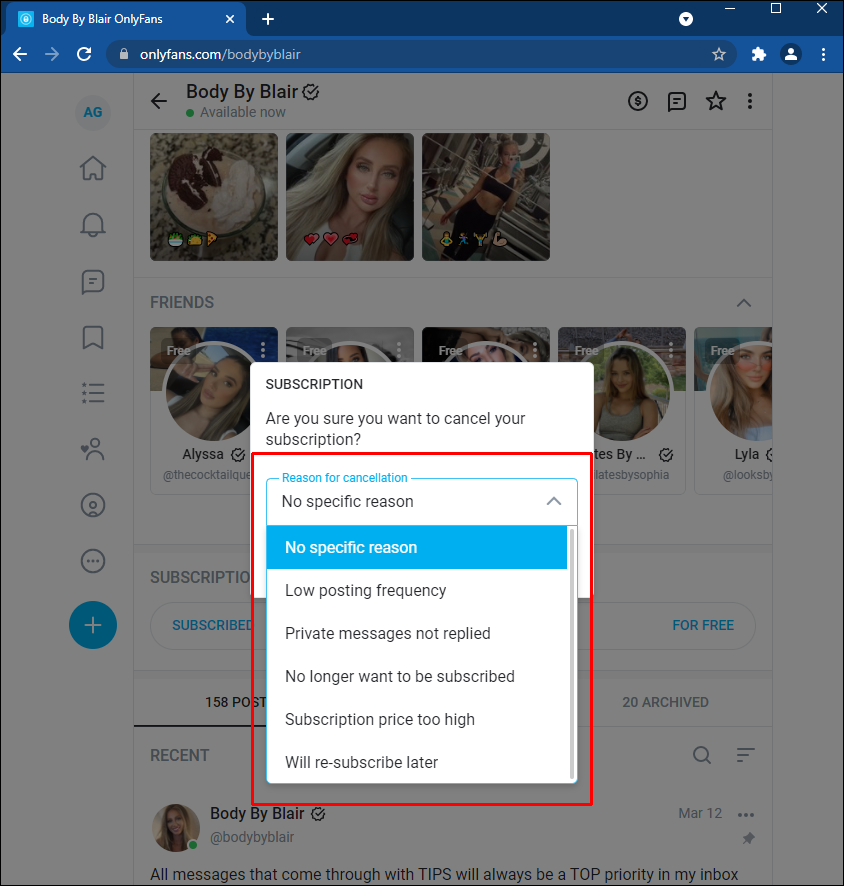
Renewal decisions have their own clock, and it rarely matches a site’s crawl schedule. On OnlyFans, when a creator raises the price, auto-renew stops and existing access continues until the paid period ends.
This table maps card age to the decisions it can realistically support.
| Card age | Decision it supports | Decision it does not support |
|---|---|---|
| 0-2 days | Subscribing at the listed base price or confirming a current promotion | Predicting next month’s price |
| 1-2 weeks | Comparing pages within a similar band and judging ranking stability | Locking in a time-limited discount you have not verified |
| 1 month or older | Reading trend direction and understanding a page’s typical pricing style | Any decision about the exact amount you will be charged today |
Here is a repeatable sequence for aligning a decision with the freshest window available.
- Locate the timestamp on the card and note the exact date and hour where possible.
- Compare that timestamp against the site’s stated refresh cadence to estimate how much drift is plausible.
- Check the page’s own subscription screen, which is always the live source of truth for price.
- If a promotion is involved, confirm whether it applies to the first month only or to the base price.
- Decide before the next scheduled refresh, or wait for it if the current card is already near the end of its cycle.
Readers who follow ranking coverage closely tend to develop a sense of which sites keep a disciplined schedule. The best onlyfans professional rankings publish their capture window alongside each list update, which makes drift easier to estimate.
When Two Sites Show Different Snapshots
Two sites listing the same page at different prices is normal, and it is almost always a timing artifact rather than an error on either side. Each site pulled its data at a different moment, and prices moved in between.
- Different crawl hours: a site that pulls at midnight will disagree with one that pulls at noon on any day a price changed.
- Different refresh intervals: a weekly site can be six days behind a daily site during a fast-moving promotion.
- Cached rows: some sites serve a cached card while a background job updates the underlying data, creating a brief internal mismatch.
- Promotion start and end times: a first-month discount captured by one site may have expired by the time the second site crawls.
- Currency conversion timing: if a card displays converted prices, the exchange rate used at crawl time affects the figure shown.
When you see a conflict, the useful move is not to decide which site is wrong. It is to identify which snapshot is newer and then verify on the platform itself. Treating discrepancies as timing differences keeps you from drawing conclusions about a page that the data never supported.
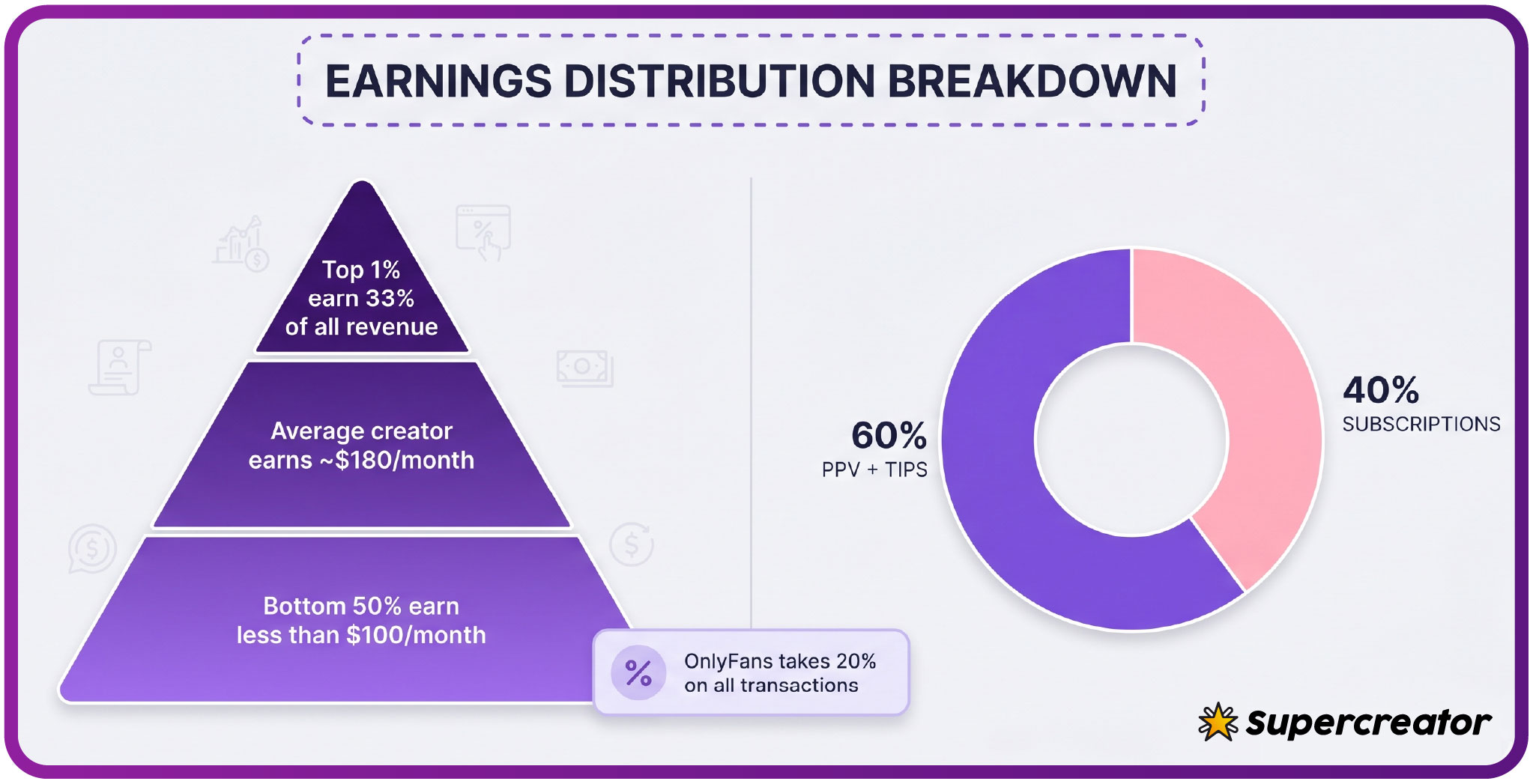
It also helps to understand where the money sits, since that shapes how often prices move. Earnings concentrate heavily at the top, and most pages rely on a mix of subscriptions, tips, and pay-per-view unlocks that can reach $50 per message. Paid chat messages commonly run $3 to $5 each. Pages with that many revenue streams adjust their offers more often than a page with a single flat subscription.

Building a Personal Freshness Check Routine
Consistency beats cleverness here. A short routine run before every payment decision will catch most stale-data mistakes, and it takes less than a minute once it becomes habit.
- Open the card and find the timestamp before reading a single price.
- Scan for change markers or price deltas that show the card has been refreshed recently.
- Cross-check one or two rows against the page’s own subscription screen.
- Note whether any low figure is a base price or a promotional first month.
- Record the card age next to your decision so you can review later whether the timing worked.
Two safety habits belong in the same routine. Enable two-step authentication on your account, and treat any message asking for payment outside the platform as a signal to stop. Payment fraud and account takeover attempts follow predictable patterns, which is why familiarising yourself with common phishing tactics is worth ten minutes of your time.
Finally, keep a simple budget line for subscriptions and review it monthly. A $0.10 card verification hold is refunded within days and will not affect that budget, but recurring renewals will, and knowing your total makes it easier to walk away from a card that is too old to trust.
FAQ
How often do ranking sites update their cards?
There is no industry standard. A few update only when a tracked page crosses an activity threshold. Because cadence varies, the only reliable method is to check the timestamp on the specific card you are reading rather than assuming a schedule.
Does an old ranking card still have any value?
Yes, for trend work. An older card shows historical price bands, ranking stability, and whether a page tends to rotate promotions. It is not reliable for the exact amount you will be charged today, so use it for context and confirm the live price on the subscription screen.
Why do two ranking sites show different prices for one page?
Different crawl hours, different refresh intervals, and cached rows all produce temporary disagreements. Identify which snapshot is newer, then verify on the platform, which is always the live source.
Should I wait for a refresh before subscribing?
Only if the current card is near the end of its cycle and the price is close to your decision threshold. Waiting adds no accuracy once you have already confirmed the figure at the source.